At Elephant Rock Private Safari Lodge, the bush is never truly silent. While many visitors focus on the calls of birds or the distant roar of a lion, another remarkable chorus begins as the sun sets — the sound of frogs. In celebration of World Frog Day, we’re taking a closer look at these fascinating creatures and the important role they play in the ecosystem, particularly their unique and surprisingly complex vocalisations.
Photo Credit: Kegan Rice
What Makes a Frog an Amphibian?
Frogs belong to a group of animals known as amphibians. The word “amphibian” comes from Greek roots meaning “double life”, referring to their ability to live both in water and on land. Frogs begin their lives in water as tadpoles, breathing through gills and swimming with a tail. As they grow, they undergo a remarkable process known as metamorphosis — gradually developing legs, losing their tail, and forming lungs so they can live on land as adult frogs. This transformation is one of the most fascinating life cycles found in nature.
The Science Behind Frog Calls
One of the most distinctive features of frogs is their ability to call. If you’ve spent an evening at the lodge, you may have heard their chorus echoing through the bushveld. Frogs produce these sounds using a vocal sac, a flexible membrane located near the throat. Air moves from the lungs across the vocal cords and into the sac, which inflates like a balloon and amplifies the sound — allowing their calls to travel surprisingly long distances. Interestingly, each species of frog has its own unique call, almost like an acoustic fingerprint.
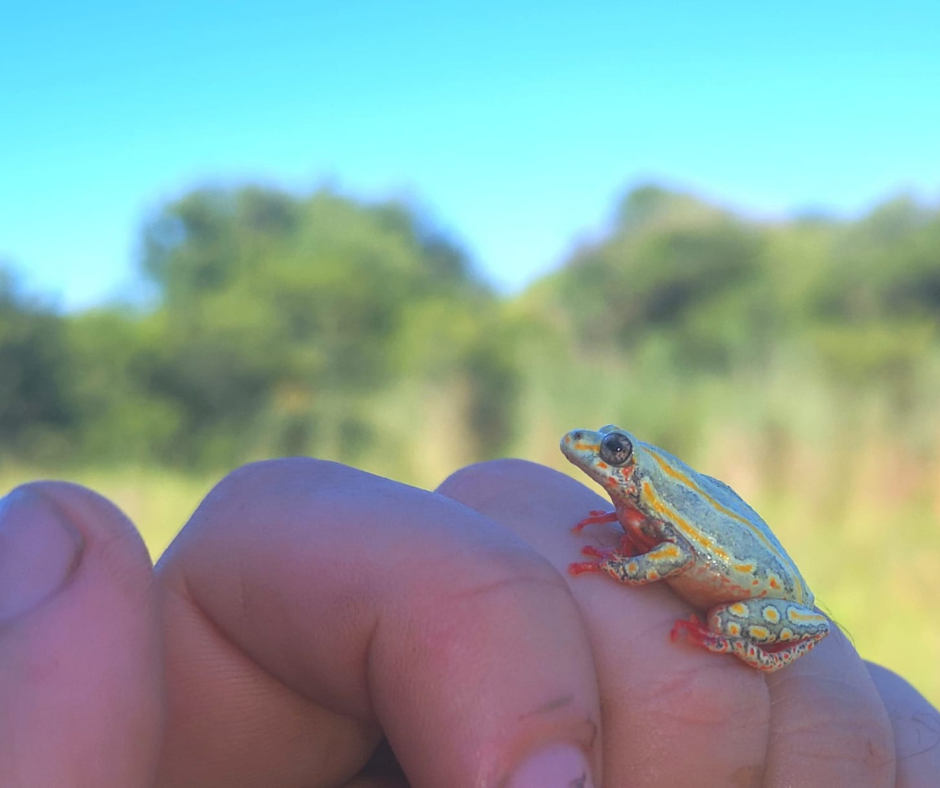
Painted Reed Frog
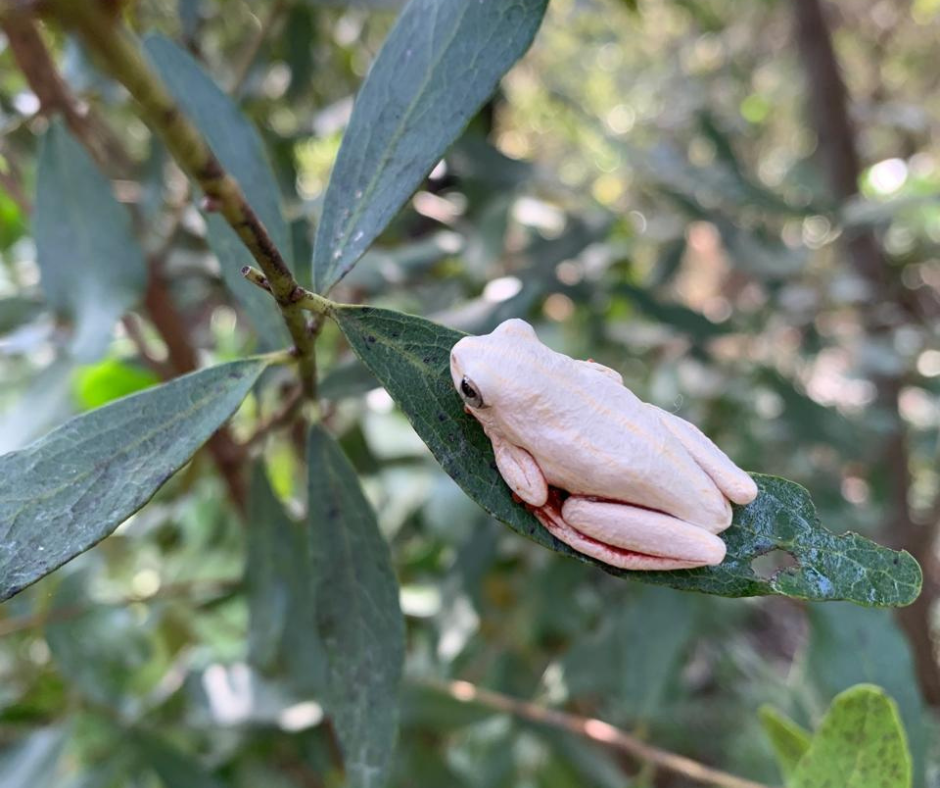
Painted reed Frog
Why Do Frogs Call?
Frogs don’t just call randomly. Each sound has a purpose, and different calls communicate different messages.
Advertisement calls are the most common. Male frogs produce these calls to attract females and signal that they are ready to mate. These calls are often loud and repetitive, forming the familiar nighttime chorus. Sometimes frogs take turns calling in a behaviour known as timeshare calling. By spacing out their calls, they avoid overlapping sounds so that each individual can be heard clearly by potential mates. When rival males get too close, frogs may switch to aggressive calls — deeper or harsher sounds meant to warn competitors to keep their distance.
Finally, there is the release call. This occurs when a frog is mistakenly grasped by another male during mating attempts. The captured frog produces a quick call that signals, “Wrong frog!”, prompting the other male to let go.
Small Creatures, Big Importance
Despite their small size, frogs play a vital role in maintaining healthy ecosystems. They help control insect populations and serve as an important food source for birds, snakes, and other wildlife. Because frogs are sensitive to environmental changes, they are also considered important indicators of ecosystem health. When frog populations thrive, it often suggests that the surrounding environment is healthy too.
Listening to the Night Chorus
Next time you visit Elephant Rock, take a moment after dinner to step outside and listen carefully. Beyond the crackling of the fire and the distant sounds of the bush, you may hear the rhythmic calls of frogs echoing across the landscape — each one a tiny voice contributing to the vibrant soundtrack of the African night.